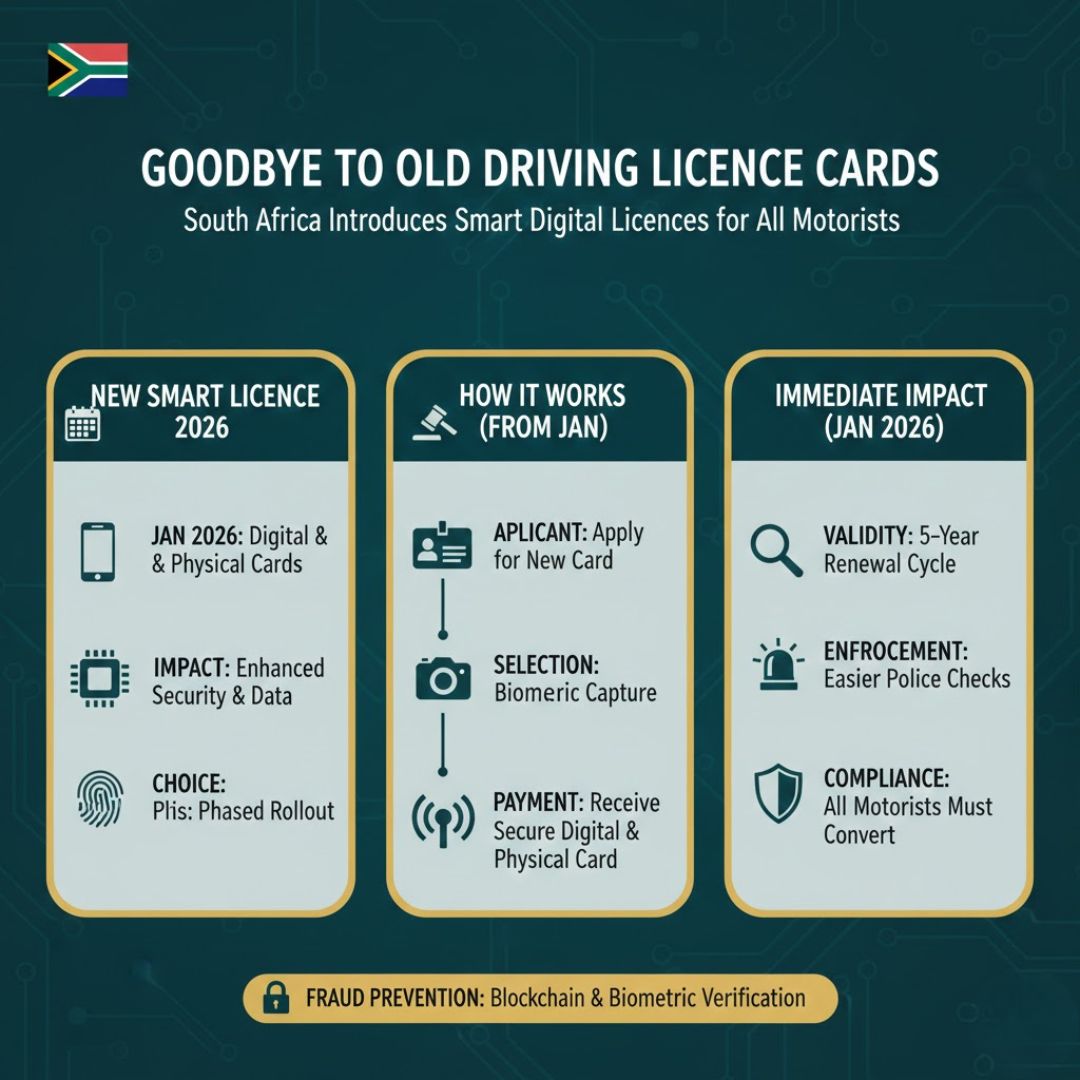
South Africa is moving away from traditional driving licence cards as the country rolls out smart digital licences for motorists nationwide. This shift is designed to modernise the licensing system, improve security, and reduce fraud that has long affected physical cards. With smartphones becoming central to daily life, digital licences promise easier access, faster verification, and smoother interactions with traffic authorities. While old cards will not disappear overnight, the change signals a major step in South Africa’s transport reforms, affecting how drivers prove their identity and driving status on the road.

South Africa’s shift to digital driving licences
The introduction of digital driving licences in South Africa reflects a broader push toward smarter public services. Authorities aim to replace outdated systems with technology that offers enhanced security features, limits forgery, and supports real-time updates. Instead of relying solely on plastic cards, motorists will be able to access licence details through secure digital platforms. This approach supports faster roadside checks and reduces administrative delays. Officials say the system is designed for national database integration, ensuring consistency across provinces. Over time, this could also lower costs linked to reprints, renewals, and lost cards.

How smart digital licences will work
Smart digital licences are expected to function through verified apps or government portals linked to a driver’s official records. Motorists may present a QR code or digital ID during checks, allowing officers instant confirmation. The system is built around real-time verification access, which helps confirm licence validity on the spot. Drivers will benefit from reduced replacement hassles if cards are lost or damaged. Importantly, the rollout focuses on secure data encryption to protect personal information, addressing concerns about privacy and misuse.
What motorists should expect during transition
The move to digital licences will happen gradually, giving motorists time to adapt. Physical cards will remain valid while digital options are introduced, ensuring no sudden compliance pressure. Drivers should watch for official announcements about registration steps and timelines. During this phase, public awareness campaigns will explain how to access and use digital licences safely. Authorities have also promised support for non-smartphone users, ensuring that no driver is excluded as systems evolve.
Summary and practical outlook
South Africa’s digital driving licence plan signals a future-focused approach to road management. While change can feel uncertain, the benefits point toward smoother processes and better security. For motorists, the key is staying informed and prepared as options expand. With long-term system efficiency in mind, digital licences may soon become the norm. As adoption grows, drivers can expect simplified licence management and fewer disruptions linked to paperwork, making everyday compliance easier.
| Feature | Old Licence Card | Digital Licence |
|---|---|---|
| Format | Plastic card | Mobile or online |
| Verification | Manual check | Instant digital check |
| Replacement | Time-consuming | Quick digital update |
| Security | Prone to fraud | Encrypted data |
Frequently Asked Questions (FAQs)
1. Will old driving licence cards still be valid?
Yes, existing cards will remain valid during the transition period.
2. Do all motorists need a smartphone?
No, alternative options will be provided for drivers without smartphones.
3. Is the digital licence legally accepted?
Yes, once rolled out, it will carry the same legal status as a physical card.
4. When will digital licences be fully implemented?
The rollout will be phased, with timelines announced by authorities.