GEPF Announces Major Change The Government Employees Pension Fund (GEPF) has announced a significant policy shift that will affect many public sector employees across South Africa. The retirement age is being extended from 65 to 67 starting on January 25. This change is set to impact thousands of workers in the public sector and has prompted both concern and curiosity about how it will unfold. As the largest pension fund in Africa the GEPF’s decision is not just about extending working years. It reflects broader trends in workforce management and economic sustainability. With this new policy the GEPF aims to address the challenges posed by increased life expectancy and the need for sustainable pension disbursements. Public sector employees are advised to review their retirement plans and seek advice if needed. Understanding how this change might affect their future financial security is important for all workers who will be impacted by the new retirement age requirements.

What the GEPF Retirement Age Increase to 67 Means for Public Servants
The Government Employees Pension Fund (GEPF) has revised its retirement policy by extending the retirement age for public sector employees in South Africa. This change responds to evolving economic conditions and long-term demographic shifts. As people are living longer, the pension system must provide financial support over a longer retirement period than originally anticipated.
By raising the retirement age to 67 years, the GEPF aims to ensure that pension benefits remain sustainable across longer lifespans. Staying in the workforce for additional years also gives employees more time to grow their retirement savings and improve overall financial preparedness for later life.
This policy update reflects a broader global movement, with many countries adjusting pension structures to address rising life expectancy and long-term funding challenges.

How the Updated GEPF Retirement Rule Affects Public Sector Employees
The revised policy requires public servants throughout South Africa to reconsider their retirement timelines. Employees will now contribute to the pension fund for two additional years, which could lead to increased retirement benefits when they eventually leave employment.
However, the change also means remaining in active service longer than previously planned. This shift may affect personal goals, career planning, and lifestyle decisions. Public sector workers are encouraged to review and adjust their retirement strategies to align with the extended working period.
Why the GEPF Retirement Age Change Reflects Global Workforce Trends
Internationally, many governments are increasing retirement ages as populations live longer and pension systems face financial strain. Several countries across Europe and North America have already adopted similar measures.
South Africa’s adjustment through the GEPF follows this global pattern. The updated retirement age supports pension fund stability, helps reduce future funding risks, and contributes to broader economic sustainability.
– It reflects longer average life expectancy across the population.
– It strengthens the long-term sustainability of pension systems.
Preparing for Retirement Under the New GEPF Timeline After January 25
With the official retirement age now set at 67, public sector employees are encouraged to take a more proactive approach to long-term financial planning. This includes reassessing savings targets and understanding how the extended career period may influence future income.
Aligning retirement strategies with the updated timeline is essential. Many employees may benefit from reviewing their plans or seeking professional guidance to ensure their financial goals remain achievable.
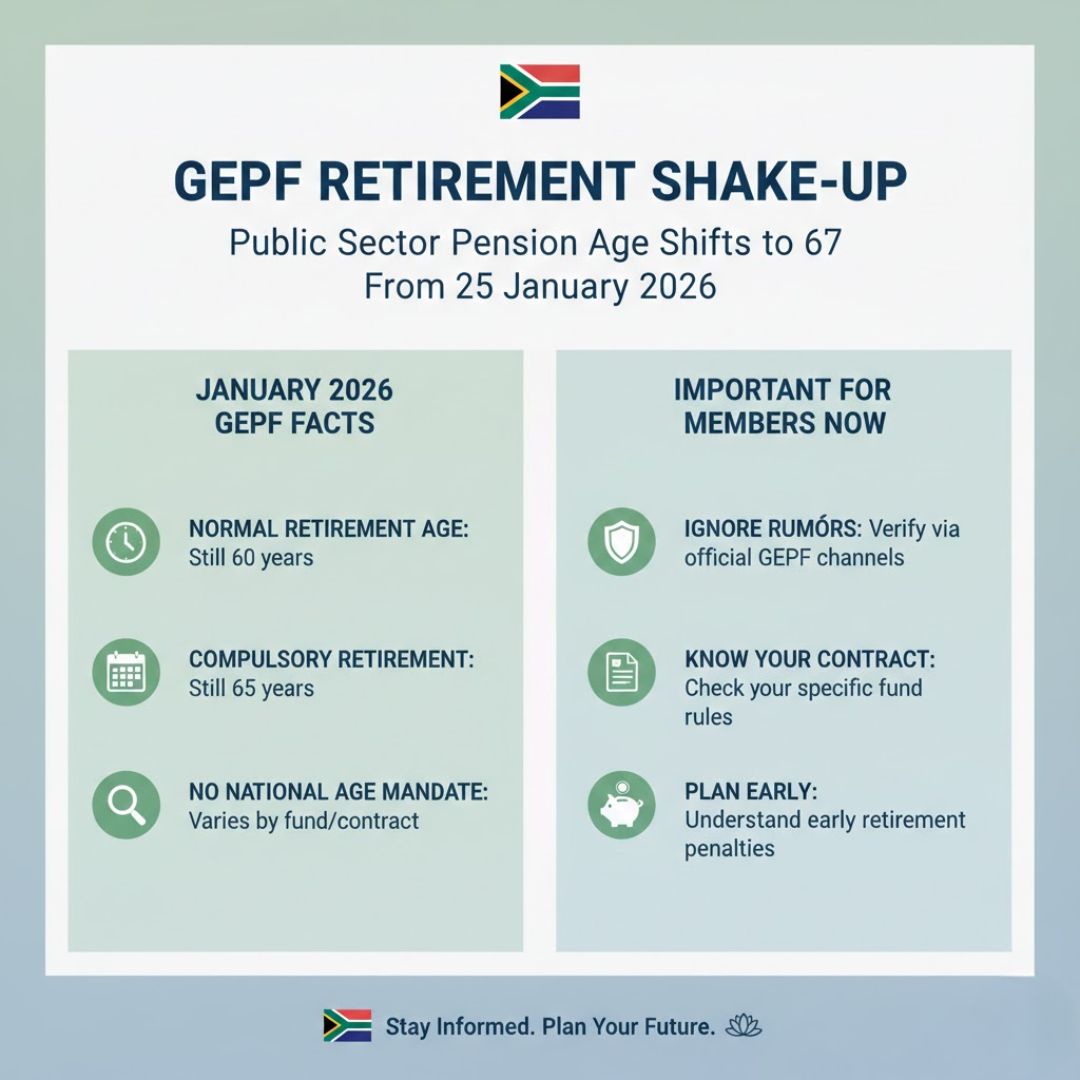
Key Areas Public Servants Should Reassess Under the Revised GEPF Policy
Adjusting to a longer working life requires careful evaluation of both professional objectives and personal priorities. While extended employment may create opportunities for career growth, it also calls for balanced planning around time, health, and long-term goals.
– Exploring career development opportunities during the additional working years.
– Investing in skills development and training to remain competitive.
– Maintaining a healthy work-life balance across a longer career span.
– Planning early for a smooth transition into retirement.