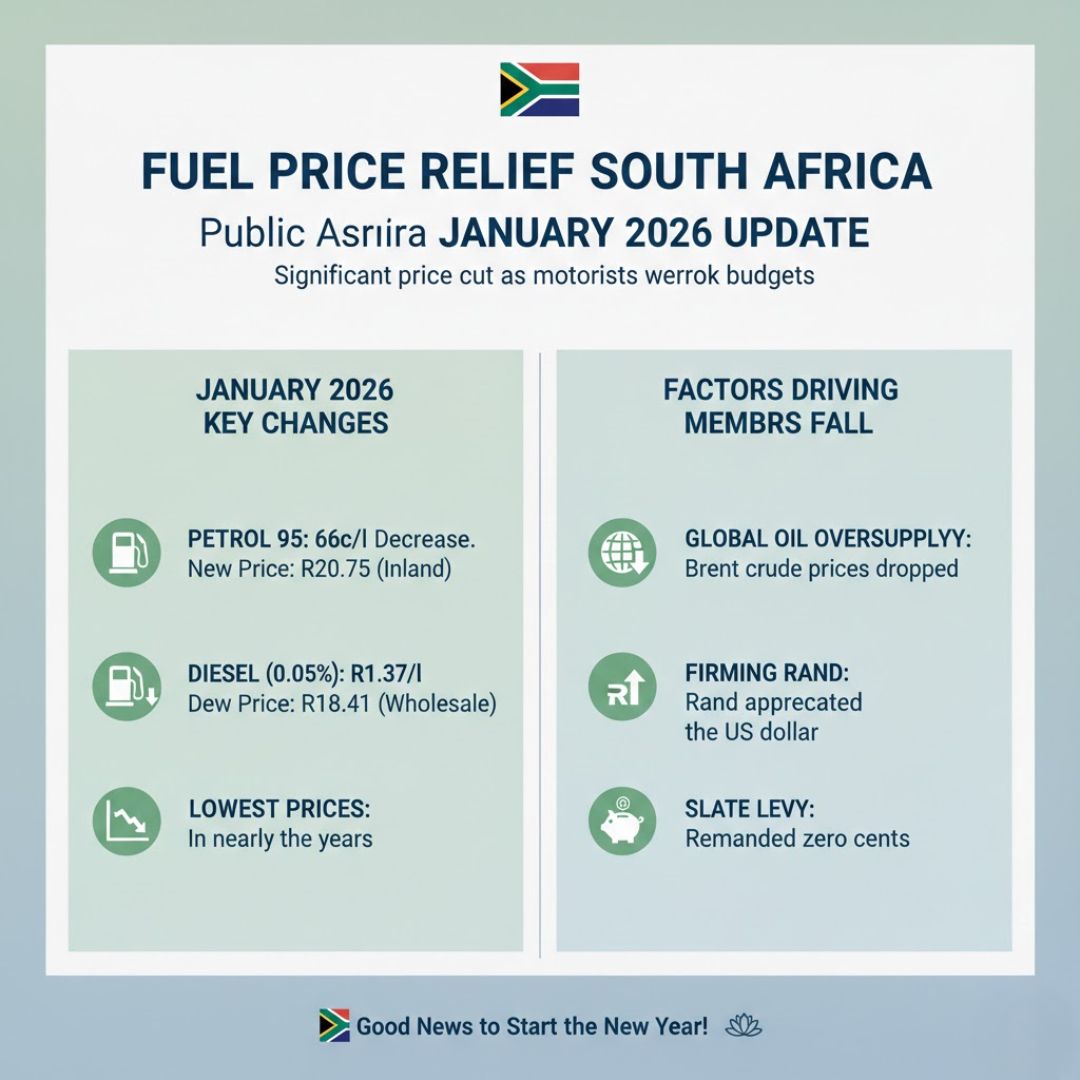
Motorists throughout South Africa will face higher fuel prices when new rates come into effect during the first week of January 2026. These changes are part of the standard monthly fuel price adjustments that reflect global crude oil prices and currency exchange rates along with modifications to local taxes and levies. Initial estimates indicate that petrol and diesel and illuminating paraffin will all see significant increases. This development is likely to add extra strain on household finances & transportation costs right at the beginning of the new year.

Key Reasons Behind the Fuel Price Increase
The expected increase in fuel prices is being driven by a combination of related factors. Global crude oil prices have continued to climb, largely due to geopolitical tensions in the Persian Gulf and other regions, along with changes in international supply and demand patterns. In addition, fluctuations in the rand-to-dollar exchange rate have raised the cost of importing refined fuel. Locally, fuel prices are influenced by taxes, levies, and South Africa’s fuel pricing structure. Although this system helps soften extreme global shocks, it still transfers a substantial share of international cost increases to local pump prices.

Projected Cost Impact for Motorists
Official fuel price adjustments for January 2026 will only be finalised once regulators publish confirmed figures. Current projections, however, suggest that petrol and diesel prices will rise compared to their closing levels in 2026. Motorists using 93 or 95 octane petrol are likely to face higher per-litre prices, while diesel users can also expect noticeable increases.
Rising Pressure on Household Finances
Higher fuel costs are expected to place additional strain on household budgets across the country. Increased transport expenses affect daily commuting, school transport, and essential travel. This added burden comes at a time when many families are already dealing with start-of-year expenses, including education-related costs and general living expenses.
Effects on Transport and Consumer Prices
The fuel price increase is likely to have wider economic effects beyond private motorists. Higher diesel prices may lead transport operators, logistics providers, and courier services to adjust their charges. Over time, these higher costs could filter through to increased prices for goods and services, as well as possible changes to public transport fares.
Government and Industry Reaction
Both government officials and industry stakeholders have consistently highlighted the difficulties created by fuel price volatility, pointing out that prices are closely linked to market-driven mechanisms. In South Africa, there is limited scope for direct government intervention in fuel pricing, with authorities often stressing the importance of fiscal discipline. Transport bodies and consumer groups may continue engaging policymakers to explore relief options or targeted support for households most affected by rising fuel costs.
Steps Motorists Can Take to Prepare
With fuel prices on the rise, motorists are encouraged to plan their fuel consumption and budgets more carefully. Practical measures such as carpooling, cutting back on non-essential trips, and practising fuel-efficient driving can help reduce the overall impact. Reviewing and adjusting household budgets ahead of time may also help ease financial pressure once higher prices take effect.
Long-Term Implications to Consider
Extended periods of elevated fuel prices can influence long-term consumer behaviour and broader economic trends. Some individuals may reassess vehicle purchasing decisions, limit travel where possible, or consider alternative transport options. Over time, continued fuel price pressure can also encourage greater interest in energy efficiency and alternative energy solutions.
Keeping Updated in the Months Ahead
Fuel prices at the beginning of January 2026 are expected to remain high. Staying updated on official fuel price announcements, exchange rate movements, and global oil market developments can help motorists anticipate future changes and plan accordingly.