South Africa is preparing for a major shift in how citizens retire, as long-standing pension and retirement age rules face a significant overhaul from 2026. The idea of automatically retiring at 67 is being reconsidered, driven by changing life expectancy, economic pressure, and workforce realities. These reforms aim to balance sustainability with fairness, affecting both public and private retirement systems. For workers, employers, and future retirees across South Africa, the changes signal a new era that could reshape financial planning, career timelines, and expectations around later-life income security.

South Africa retirement age reform explained
The retirement age reform introduces a flexible framework rather than a fixed cut-off point, allowing people to align work decisions with health and financial readiness. Policymakers argue this approach supports longer working lives while easing pressure on public funds. The changes also reflect economic sustainability goals as the country faces rising pension costs. For many employees, this means more options around phased retirement and delayed exits from the workforce. At the same time, safeguards are being discussed to protect those in physically demanding jobs, ensuring fair retirement access and reducing inequality created by a single retirement age.

Pension system changes affecting future retirees
Alongside age adjustments, the pension system itself is being modernized to improve coverage and efficiency. Authorities are focusing on pension fund alignment between public and private schemes, aiming for clearer rules and better portability. Another priority is improved contribution tracking, which should help workers understand their projected benefits earlier. These updates may also encourage higher voluntary savings through incentives, supporting long-term income security. For younger workers, the reforms highlight the importance of early planning, while older workers may benefit from transitional measures designed to smooth the shift.
What retirement framework overhaul means for workers
For employees, the new framework could redefine career planning and workplace expectations. Flexible retirement may open doors to extended employment options, allowing skills and experience to remain in the economy longer. Employers may need to adapt policies around succession planning and benefits, ensuring workplace policy updates keep pace with legal changes. Workers approaching retirement age should review contracts and savings strategies to manage retirement timing choices. Overall, the shift encourages more personalized decisions, replacing a one-size-fits-all model with options that reflect diverse circumstances.
Summary and outlook for 2026
The planned overhaul marks a turning point in how South Africa approaches retirement. Moving away from a rigid age limit aims to balance fiscal responsibility with social fairness. Success will depend on clear communication, gradual implementation, and strong protections for vulnerable workers. If managed well, the reforms could strengthen confidence in the pension system and promote financial planning awareness nationwide. As 2026 approaches, individuals are advised to stay informed, seek professional guidance, and prepare for a retirement landscape that values flexibility over fixed milestones.
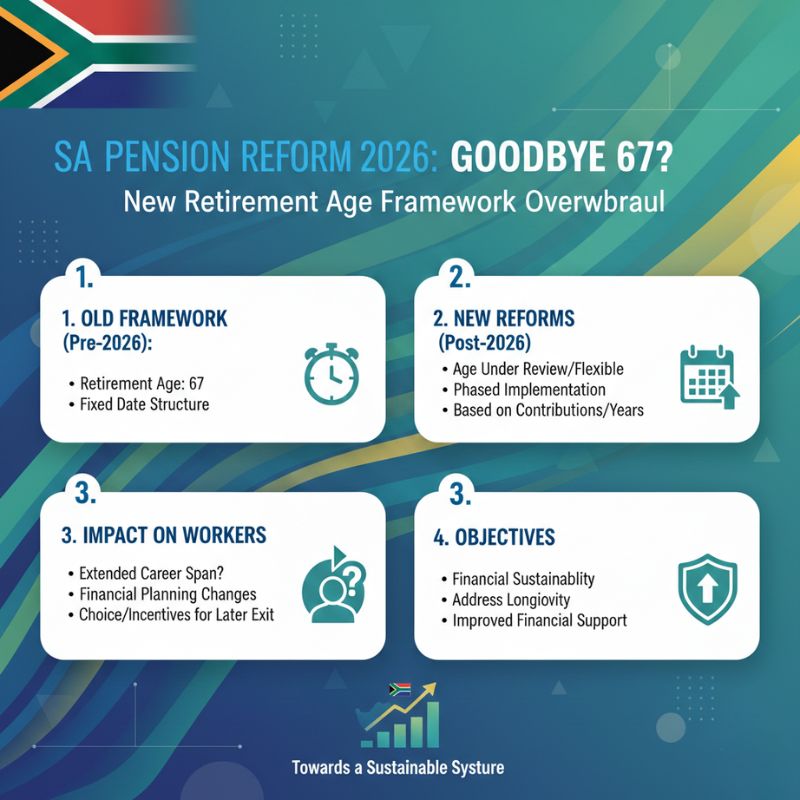
| Aspect | Before Reform | From 2026 |
|---|---|---|
| Standard Retirement Age | 67 years | Flexible range |
| Pension Structure | Separate schemes | More aligned systems |
| Work Options | Fixed exit | Phased retirement |
| Planning Requirement | Later-stage focus | Earlier preparation |
Frequently Asked Questions (FAQs)
1. Is retirement at 67 completely ending in South Africa?
No, 67 is no longer fixed, as flexible retirement ages will be introduced.
2. When do the new retirement rules take effect?
The updated framework is planned to start from 2026.
3. Will current retirees be affected by these changes?
Existing retirees are generally not impacted by the new rules.
4. Should workers adjust their retirement savings plans now?
Yes, reviewing savings early can help align with the new flexible system.