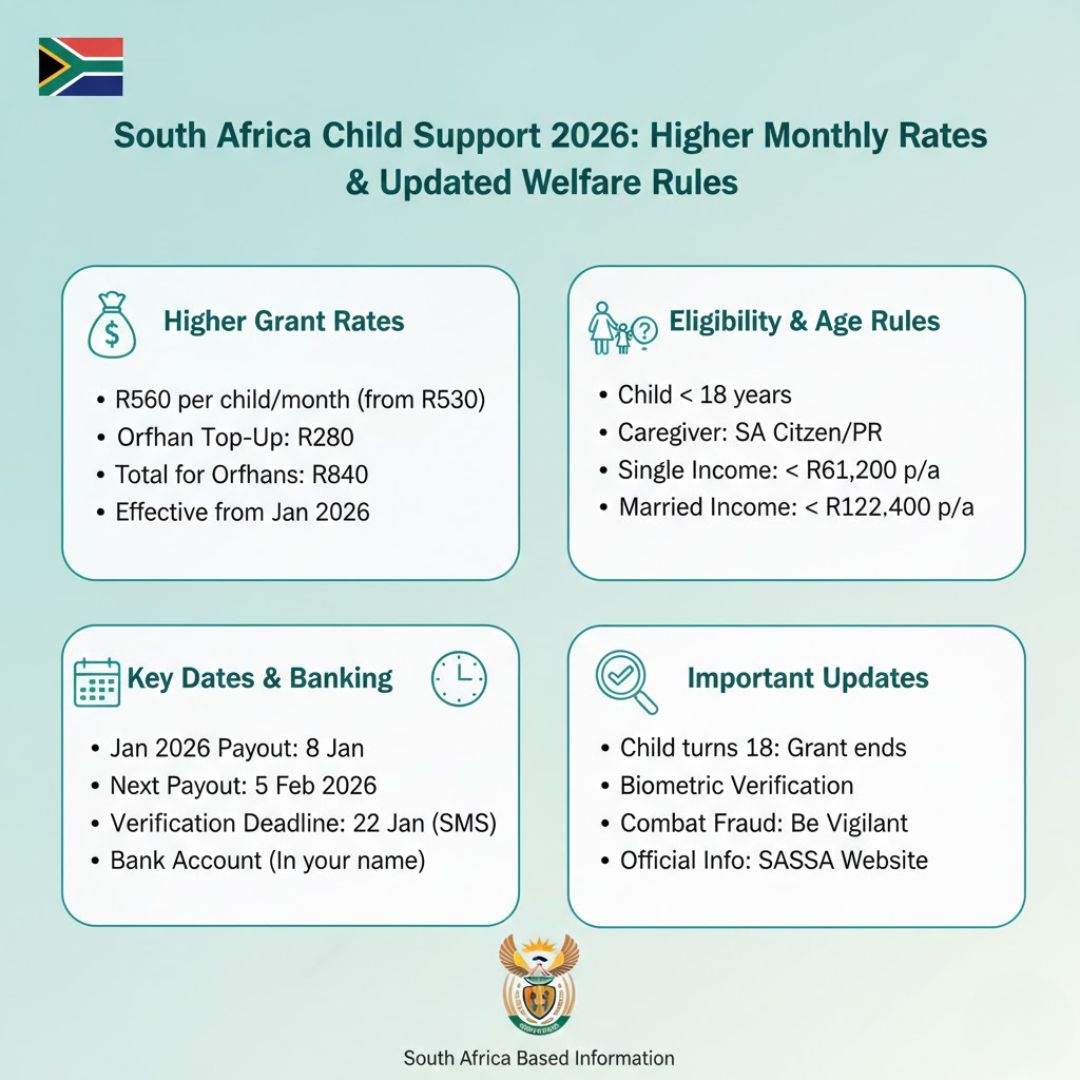
Families across South Africa are seeing a meaningful shift in welfare policy as updated child grant rules remove long-standing limits and introduce higher monthly payments. The changes are designed to reflect today’s cost of living, helping caregivers better support children’s daily needs. By adjusting income thresholds and increasing payout levels, the government aims to widen access while reducing financial pressure on low- and middle-income households. For many parents and guardians, this update marks a practical move toward more inclusive and responsive social assistance.

Higher Child Grant Support Under Updated Welfare Rules
The revised system replaces older caps with higher monthly support that better matches rising food, transport, and education costs. Authorities have also revised eligibility to include revised income thresholds, allowing more working families to qualify without fear of sudden exclusion. Another major change is expanded age coverage, ensuring children remain supported through critical development stages. To keep payments relevant, the structure allows automatic adjustments tied to economic conditions, reducing the need for frequent policy overhauls.

Child Grant Eligibility Changes Make Access Easier
Applying for the child grant has become more straightforward thanks to simplified eligibility checks that rely on updated data sharing across departments. Caregivers can now monitor progress through digital application tracking, cutting down uncertainty and repeated visits. These upgrades support faster approval timelines, meaning families receive help when it is most needed. By lowering the reduced paperwork burden, the system aims to be less intimidating for first-time applicants.
Higher Monthly Child Grant Rates and Family Impact
For households, the real value lies in improved household stability, as consistent payments help plan monthly expenses. Extra funds support nutrition and schooling, covering essentials that directly affect child development. Caregivers report noticeable caregiver financial relief, easing stress and improving wellbeing. Over time, policymakers expect positive long term outcomes, including healthier children and stronger community resilience.
What the Updated Child Grant Rules Mean Long Term
From a broader perspective, this reform signals a policy shift impact that prioritizes adaptability over rigid limits. By strengthening the social protection focus, South Africa aligns welfare support with real household pressures. The approach reflects a family centered reform, aiming not only to relieve poverty but to support sustainable development through childhood.
| Category | Previous Rules | Updated Rules |
|---|---|---|
| Monthly Amount | Lower fixed rate | Higher adjusted rate |
| Income Threshold | Strict limit | Expanded range |
| Child Age Coverage | Limited age band | Extended eligibility |
| Application Method | Mainly in-person | Digital and in-person |
| Review Frequency | Irregular updates | Periodic adjustments |
Frequently Asked Questions (FAQs)
1. Who qualifies for the updated child grant?
Eligibility depends on household income, child age, and residency under the new thresholds.
2. When do the higher payments start?
The increased rates apply from the first payment cycle after the new rules take effect.
3. Do current beneficiaries need to reapply?
Most existing recipients are automatically adjusted without a new application.
4. How can applicants check their status?
Status updates are available through official online portals and local service offices.